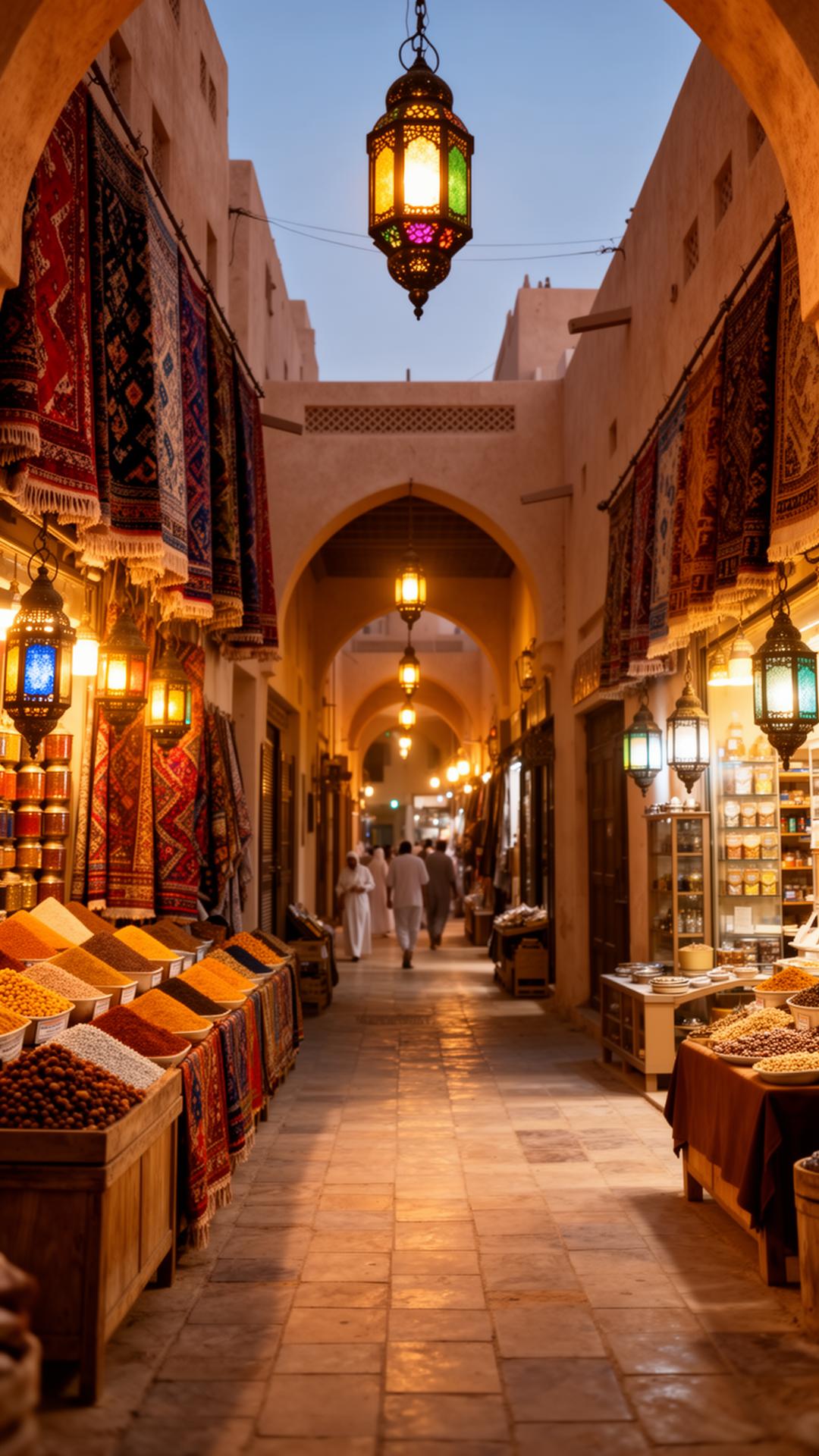
Old Dubai Guide
Before the skyscrapers, Dubai was a pearl-diving and trading town along the Creek. Old Dubai keeps that heritage alive: wind towers, dhows, souks and heritage cafés.
Dubai Creek and abra rides
Dubai Creek splits Bur Dubai (south) and Deira (north). Wooden abras shuttle people across for 1 AED, every few minutes from sunrise to past midnight.
Al Fahidi Historical Neighbourhood
Sand-colored alleys, wind towers, art galleries, museums and the famous Arabian Tea House. The most atmospheric corner of the city.
The souks of Deira
- Open in Google Maps
Gold Souk
Hundreds of jewellery shops. Prices include a small craftsmanship fee on top of the daily gold rate.
- Open in Google Maps
- Open in Google Maps
Textile Souk
Across the Creek in Bur Dubai. Pashminas and fabric by the metre.
- Open in Google Maps
Perfume Souk
Custom oud and Arabic blends near the Gold Souk.
Jumeirah Mosque and culture
One of the few mosques in the UAE open to non-Muslim visitors. Guided tours explain Emirati customs, dress code and daily prayer.
Tips for Old Dubai
When to go
Early morning or evening — midday alleys can be hot, especially in summer.
How to bargain
Polite and friendly. A starting offer of 50–60% of the asking price is fair in souks.
How to dress
Cover shoulders and knees, especially near the mosque and inside souks.
How to get there
Metro Green Line: Al Fahidi for Bur Dubai, Al Ras for the Gold and Spice Souks.
Frequently asked questions
- What is Old Dubai?
- Old Dubai refers to the historic neighbourhoods of Bur Dubai and Deira along Dubai Creek, where the city began as a trading port.
- How do I cross Dubai Creek?
- By abra (a traditional wooden boat) for 1 AED, by water taxi or by metro via the Al Ghubaiba bridge area.
- Are the souks worth visiting?
- Yes. Even if you don't buy, the Gold and Spice Souks are a sensory experience and a window into Dubai's trading roots.
- What should I buy in Dubai souks?
- Gold and silver jewellery, saffron, dates, frankincense, oud perfume, pashminas and Arabic sweets like luqaimat.
Related guides
What to See in Dubai
The unmissable Dubai sights: Burj Khalifa, Old Dubai, desert, beaches, souks and more.
Dubai in One Day
A practical one-day Dubai itinerary with morning, midday, afternoon and evening.
Dubai Desert Safari Guide
Dune bashing, camel rides, sunset and Bedouin camps near Dubai.
Best Beaches in Dubai
JBR, Kite Beach, Sunset Beach, Palm and the best stretches of sand in Dubai.
Where to Stay in Dubai
Downtown, Marina, Palm, Deira, Bur Dubai and the best Dubai neighbourhoods.
Dubai Food Guide
Emirati food, Arabic grills, Indian, Lebanese and the dishes you must try in Dubai.